

Amazon and eBay can both work for automotive and industrial parts sellers, but they do not reward the same kind of catalog. A seller listing high-volume replacement parts, branded tools, or standardized MRO supplies might have different requirements from one selling used components, rare parts, refurbished equipment, or highly specific SKUs.
Each marketplace handles fitment and compatibility data its own way, sets its own listing requirements, and attracts a different buyer profile. Those differences carry through to how you structure complex listings, what buyers expect on condition and pricing, and how fees, returns, and fulfillment shape your margins.
Amazon tends to suit new, high-volume, standardized products that move well through Prime fulfillment. eBay Motors works more as a specialized, seller-friendly hub for both new and used parts, with more room for used, discontinued, and hard-to-find stock.
For sellers comparing Amazon vs eBay for automotive parts and industrial supplies, the right marketplace depends on your catalog. What you sell, how standardized it is, whether your buyers need fitment confidence, and how much control you want over listings, pricing, and fulfillment can all change which marketplace suits you best.
How Do Amazon and eBay Handle Automotive Fitment?
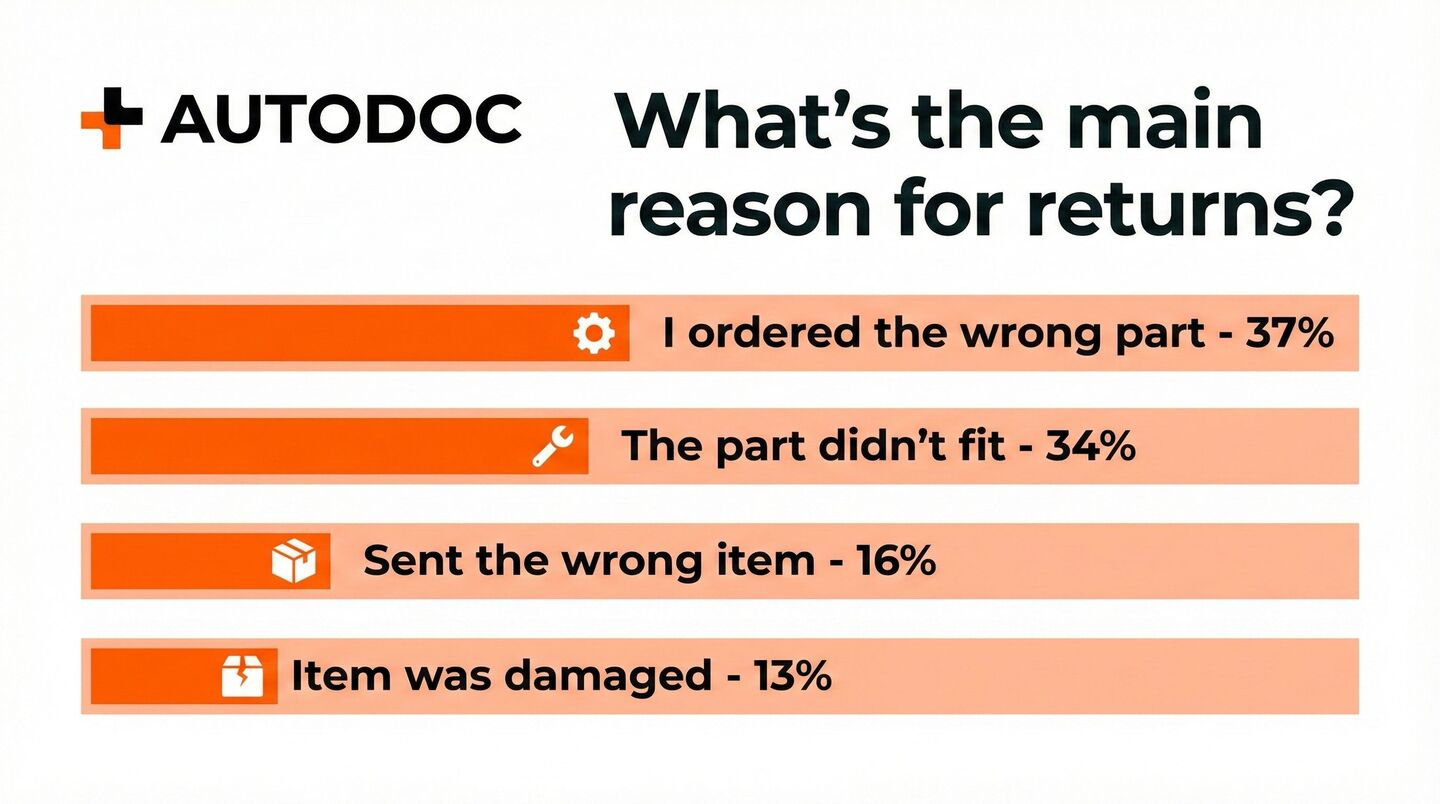
Fitment data is the information that helps a buyer find parts that fit their vehicle, and getting it wrong is a common cause of returns. Amazon and eBay handle this data differently.
Amazon requires fitment data in the auto industry’s ACES and PIES formats. Shoppers then use its “Part Finder” tool to check whether a part fits their vehicle. eBay uses its own compatibility system. The marketplaces differ most in the tools and protection they offer:
| Fitment Feature | Amazon | eBay |
| Data standard | ACES and PIES required | eBay’s own compatibility system |
| Shopper fit-check tool | Amazon Confirmed Fit | My Garage |
| Keeping fitment data updated | Manual (Automotive Fitment Manager) | Manual & Automatic, free (Fitment Plus) |
| Protection for the buyer if a part doesn’t fit | None | eBay Guaranteed Fit (buyer refund if an eligible part doesn’t fit) |
Because Amazon and eBay use different systems, listing on both means preparing the same product data twice, once in each format. Selling into Europe adds a third version, since European catalogs follow the TecDoc standard rather than ACES. A gap or mismatch in either version can cause wrong-part orders, returns, and lost search visibility. To keep both accurate, many businesses selling automotive parts online prefer to outsource automotive data management.
How Do Amazon and eBay Serve Industrial Buyers?
When comparing Amazon vs eBay for industrial parts, the deciding factor is the buyer rather than fitment. These parts are bought mostly by businesses, not consumers, so each marketplace competes through a dedicated B2B channel.
Amazon serves this market through Amazon Business. Its industrial front offers:
- A significantly growing range of industrial and scientific supplies
- Access to more than 8 million business buyers, including 97 of the Fortune 100 [Source: Amazon News]
- Business pricing, quantity discounts, and tax-exempt purchasing for registered buyers
eBay competes through eBay Business Supply. It brings together:
- More than a dozen categories, from MRO to lab and electrical supplies
- Used, refurbished, and new stock in one place
- Buyers from small businesses to large enterprises
In practice, the two marketplaces serve many of the same industrial buyers, but they suit different kinds of orders. Amazon Business is meant for routine, high-volume purchasing of new supplies, while eBay Business Supply is known for used, surplus, and hard-to-find equipment. That contrast is the core of the Amazon vs eBay for industrial parts debate; one optimizes for new-supply scale, the other for range.
What Do Amazon and eBay Charge for Automotive and Industrial Parts in 2026?
Amazon and eBay do not apply a universal selling fee across all product types. What you pay depends on the category your item is listed under, so automotive parts and industrial supplies can fall under different fee structures, and even sub-categories within them can carry different rates.
For sellers comparing Amazon vs eBay in 2026, it’s worth checking the exact category, because referral fees, final value fees, listing fees, and optional promotion costs each affect margins differently on the two marketplaces.
| Marketplace | Automotive | Industrial |
| Amazon |
|
|
| eBay |
|
|
The base rates are close.
- Amazon charges a flat 12% referral fee, or 10% on tires.
- eBay charges 13.6% of the sale up to $7,500, plus a per-order fee of $0.30 to $0.40. A few industrial categories on eBay, such as heavy equipment, are lower.
- For cross-border sales, eBay also adds a 1.65% international fee when the seller does not use its own shipping service.
Beyond the percentage, each platform adds its own charges. Amazon has a $39.99 monthly Professional plan and optional Fulfillment by Amazon charges. eBay gives 250 free listings a month and charges $0.35 for each additional listing.
Which Marketplace Should You Choose?
Choosing the right automotive eCommerce marketplace depends on what you sell, who buys it, and how your catalog is structured. The table below compares common seller scenarios and shows whether Amazon or eBay is usually the better fit.
| Your situation | Better fit | Why |
| New, branded parts with steady turnover | Amazon | Large buyer base and fast Prime shipping move stock quickly |
| Used, refurbished, or hard-to-find parts | eBay | Shoppers come here looking for used and rare parts |
| Bulk supply for business and procurement buyers | Amazon Business | Procurement scale and business pricing |
| Surplus, MRO, or out-of-production industrial stock | eBay Business Supply | Meant for used and hard-to-find range |
Two factors worth considering before you commit to Amazon or eBay for industrial or automotive parts:
- For fitment, eBay shifts more of the risk off the seller. Buyers filter by their own vehicle details, which cuts listing errors, and when an eligible part still doesn’t fit, eBay handles the return and covers return shipping. Amazon offers no equivalent fitment-return program. Both marketplaces still depend on accurate fitment data to work, but they differ in what happens when a product doesn’t match: on Amazon, the seller covers the return, while eBay’s program covers part of it.
- When it comes to fees, the two marketplaces are close enough that cost shouldn’t drive the decision. Amazon’s flat 12% and eBay’s 13.6%, plus a small per-order fee, rarely separate them by much. Thus, treat it as a tiebreaker, not a starting point.
If you sell varied stock, using both marketplaces often makes sense, since each reaches buyers that the other doesn’t. The downside is that a two-platform strategy also means twice the operational work. Listings, inventory, pricing, fulfillment, returns, and account health all need regular attention across both storefronts. For sellers without the time or internal resources to manage that workload, working with Amazon or eBay account management specialists can be a practical way to keep both channels running smoothly.
The Key Takeaway
When deciding between Amazon vs eBay for automotive parts or industrial stock, the best place to sell auto parts online comes down to where your advantage lies.
Amazon is usually the better fit if your catalog is built around scale: new, branded, high-turnover products, repeat purchases, or volume orders from business buyers. eBay is often stronger if your advantage is selection depth: used, refurbished, surplus, discontinued, rare, or hard-to-find parts.
The larger marketplace isn’t the better choice; the one that matches your catalog is.
