
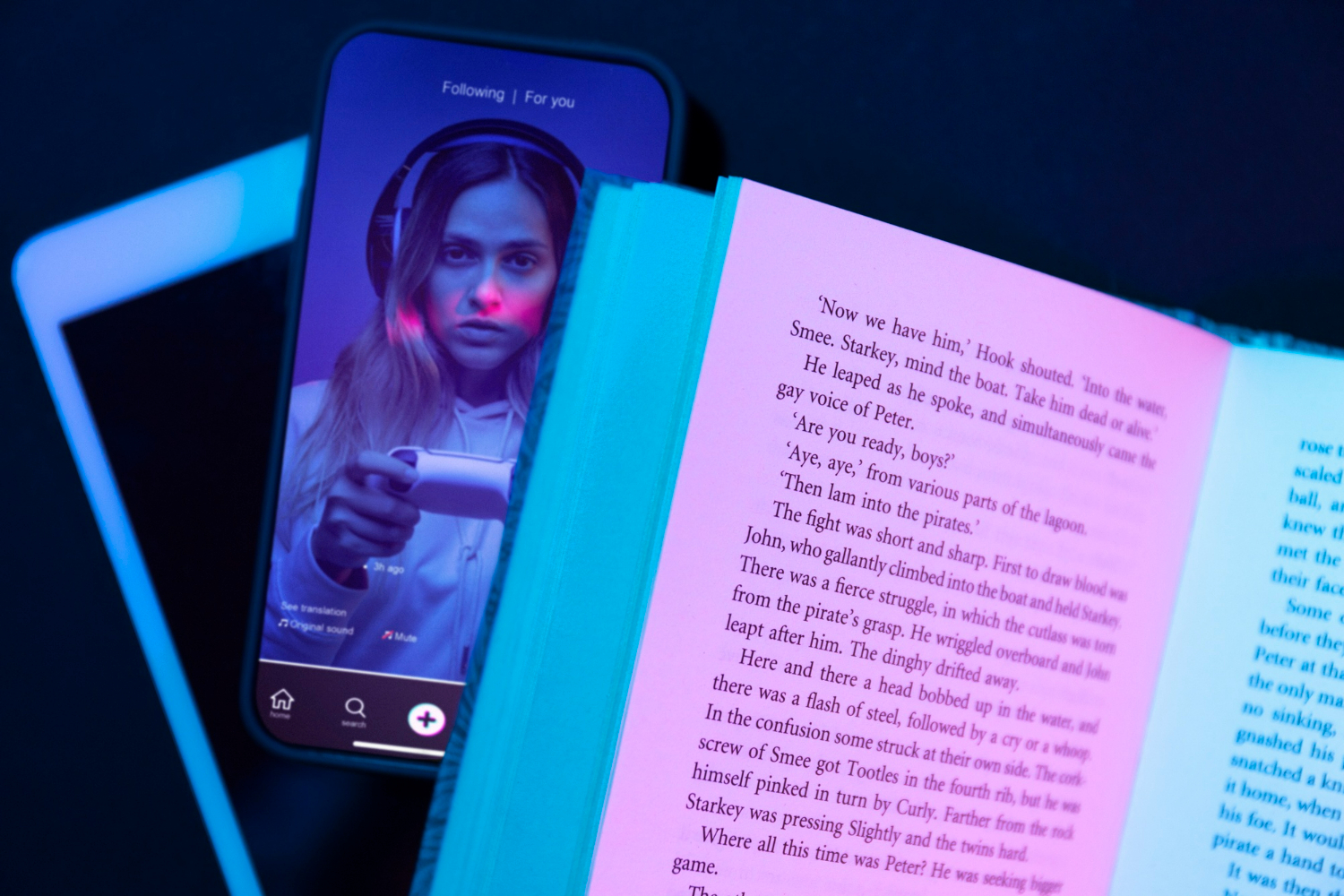
Stories No Longer Sit Still
For centuries books stood firm as pillars of linear storytelling—ink on paper bound by spines and turned by hand. But that’s changing fast. Today reading is no longer confined to just sight or silence. With audiobooks screenreaders and AI-generated content gaining popularity the act of reading stretches beyond simple visual intake. It becomes layered interactive and sometimes even predictive.
In this shifting space Z lib unites various genres and book types in one place allowing readers to explore a new kind of literary experience where flipping pages isn’t always the goal. Whether it’s scanning a novel on a tablet or listening to nonfiction during a morning run reading adapts to fit how people live not the other way around. Blending methods doesn’t mean replacing old habits—it means reshaping them into something more flexible.
Audio Breathes New Life Into Pages
Audiobooks were once considered niche but now they’re everywhere. Narrated by professionals or even AI voices these spoken versions open doors for multitasking immersion and accessibility. Listeners can experience the same story arcs character growth and tension that traditional reading provides—just without the page-turning.
For many it’s a way to bring stories into moments that used to be off-limits. Commuters tune into memoirs while stuck in traffic. Parents fold laundry to the rhythm of thrillers. And students double up on learning by pairing reading with listening. The rhythm of a voice adds tone and pace giving emotion where silent reading might miss it. This dimension doesn’t replace the book—it adds another layer to it.
AI Is Not Just a Trend—It’s Changing the Format
Artificial Intelligence now joins the reading experience not as a replacement but as a contributor. Machine-generated summaries custom storytelling and predictive recommendations are just the surface. AI can reformat dense texts to make them easier to digest or adjust tone and vocabulary for different levels of understanding. In doing so it makes complex information more available.
The idea isn’t to reduce reading to data but to let readers shape the material to suit their needs. Those who want deeper context or simpler breakdowns can have both. And that balance becomes more important as attention spans shift. A wide-ranging reference like reddit shows how platforms are evolving not just in content but in format and access method.
Compact technology and blended learning push us to rethink what reading feels like and how it fits into everyday life. With that in mind consider three emerging approaches that help reimagine the reading experience:
-
Immersive Story Environments
Instead of reading a flat narrative readers step into soundscapes background effects and tonal shifts triggered by text position. These tools make fiction more vivid and nonfiction more digestible. It’s not about gimmicks but about making a scene stick in the mind. A medieval village sounds alive. A courtroom buzzes with tension. Memory hooks form not just from words but from the full sensory backdrop.
-
AI-Personalized Reading Paths
Rather than everyone following the same sentence-to-sentence route AI helps suggest jumps side-notes or recaps. This isn’t only for those in a rush. It’s for readers who want to explore at their pace or revisit key parts in fresh ways. The story may remain the same but the road through it can bend and flex.
-
Multiformat Book Releases
More publishers now release works in print audio and AI-enhanced formats at the same time. This lets people switch seamlessly without losing progress or depth. Reading on a screen on Monday listening on Wednesday and reviewing AI-summarized takeaways by Friday becomes one unified loop—not a fragmented mess.
While these ideas gain ground they also spark questions. What happens to attention when everything is designed to hold it tighter? Is there still room for slow quiet reading?
The Quiet Renaissance of Choice
In a way the rise of multimodal reading isn’t about more noise. It’s about more choice. People aren’t giving up print or silent reading—they’re adding new forms to match their moments. A book doesn’t change but the way it’s reached and absorbed becomes more fluid.
Readers no longer follow just one lane. They hop between formats guided by time space or even mood. Some days it’s a deep dive with a hardcover. Other days it’s a few pages on a phone followed by a narrated chapter while cooking. What used to be a single thread of attention is now a rich tapestry made of varied threads all leading back to the same source—story.
Multimodal reading doesn’t ask for loyalty to one form. It just invites readers to pick the one that fits.
